
A possible pilot
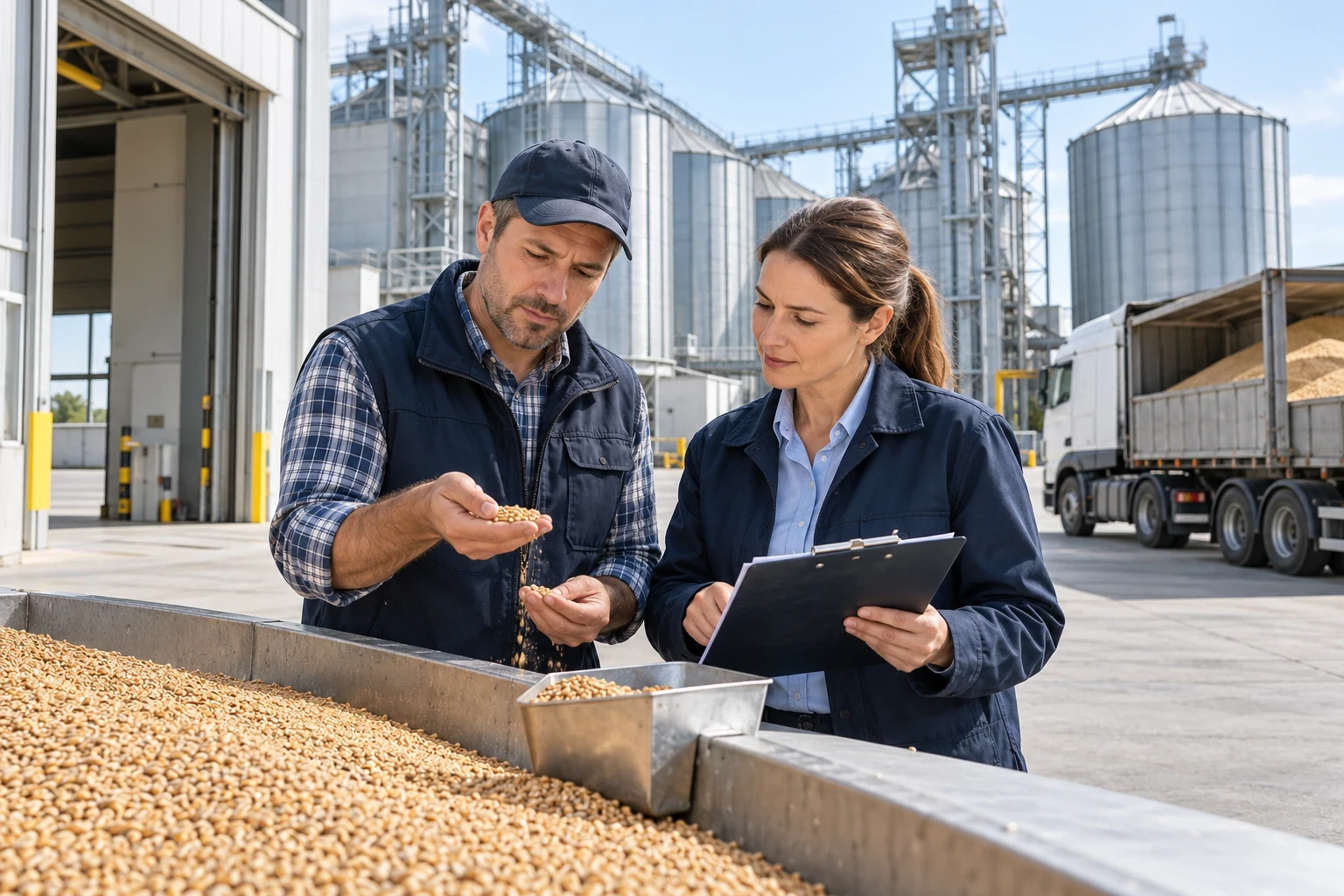
Structure quality and origin records and identify missing information for the next review.
AI in agriculture · For large organisations & Enterprise
Deliveries, quality records and coordination across many farms create complex information flows. We help agricultural traders, cooperatives and processors prioritise AI applications and connect them to existing data, systems and responsibilities.
YOUR STARTING POINT
Management, planning and IT need to know whether data from different sources is comparable and usable for the intended purpose. We examine a bounded process, its seasonal characteristics and current decisions before assessing which automation or analysis makes sense.

Structure documents from different suppliers and flag missing fields. Data origin, batch references and professional approval remain traceable before information enters existing systems.

Examine historical volumes, available weather information and sales data for a specific planning question. Compare seasonal differences and uncertainty against a baseline. AI does not guarantee reliable intake planning.

Provide approved guidance and internal procedures with sources. Clarify ownership, updates and permissions. Advisory teams remain responsible for interpretation and recommendations.
A useful pilot produces a decision brief: assessed data sources, quality criteria, ownership and an estimate of ongoing effort. Its scope and deliverables are agreed before implementation.
Choose a workflow with its domain owner. Agree source access, typical cases, exceptions and a comparison with the current process.
Assess output quality, traceability, errors, review effort and costs. Define who approves wider use and which findings would stop it.
Plan maintenance, support, permissions and changes. Check differences between teams or sites before extending use.
Training empowers your team to use AI independently in their daily work. Our consulting, on the other hand, guides you strategically from potential analysis to company-wide integration.
Our general Enterprise training offer is tailored around appropriate tasks for planning, advisory services, administration and management.
Assess sources, seasonal workflows and integration needs, then plan a pilot with clear ownership and an operational decision point.
Simply contact us for a no-obligation initial consultation.
Free initial consultationAI in agriculture
A useful starting point is a specific task. These points help you assess value, effort and prerequisites for your project.
Structure quality and origin records and identify missing information for the next review.
Cooperatives and processors clarify data handovers between farms, quality teams and traders, including supply-chain access.
Approved operational documents, clear batch or delivery references and a list of required evidence.
Compare documentation time, missing information and corrections with the current process.
Operational, agronomic and safety decisions require expertise and suitable data; a language model does not replace them.
Data preparation, the number of systems, exception handling and professional review affect the effort. The proposal defines deliverables, acceptance, ownership and recurring costs. A more extensive solution is worthwhile only when the additional value justifies it.
We discuss your task and clarify which service fits.
Discuss a concrete use case with us, including its domain owners, system boundaries and success criteria.
Request a free initial consultation